

Lake George Battlefield Park preserves historic grounds at the southern end of Lake George in Lake George, New York. You can walk among monuments, marked historic sites and the ruins of Fort George.
- Location: Fort George Road, Lake George, NY 12845.
- Historic highlights: The Battle of Lake George site, Fort George ruins and several monuments.
- Visitor Center: Operates seasonally and by appointment during the off-season.
Where the Battlefield Park Sits
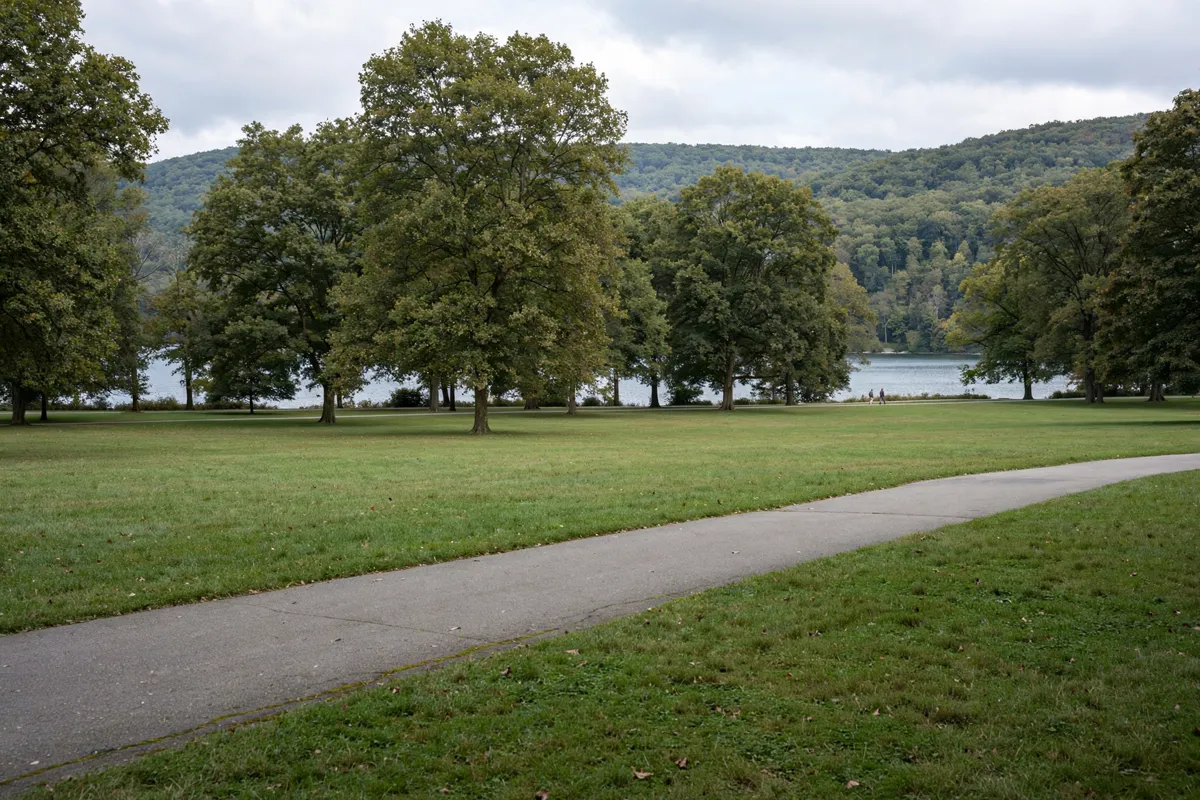
Lake George Battlefield Park sits at the southern end of the lake, close to Lake George village. Its address is Fort George Road, Lake George, NY 12845, making the park a straightforward stop to pair with time in the village.
The park is operated by the New York State Department of Environmental Conservation. If you are planning a broader outing, the Lake George village guide covers nearby sights and streets.
The Park’s Historic Context
The grounds connect several chapters of Lake George history, including the Battle of Lake George in 1755, a Revolutionary-era American hospital and Fort George. A New York State Department of Environmental Conservation guide identifies these features as part of the site’s history.
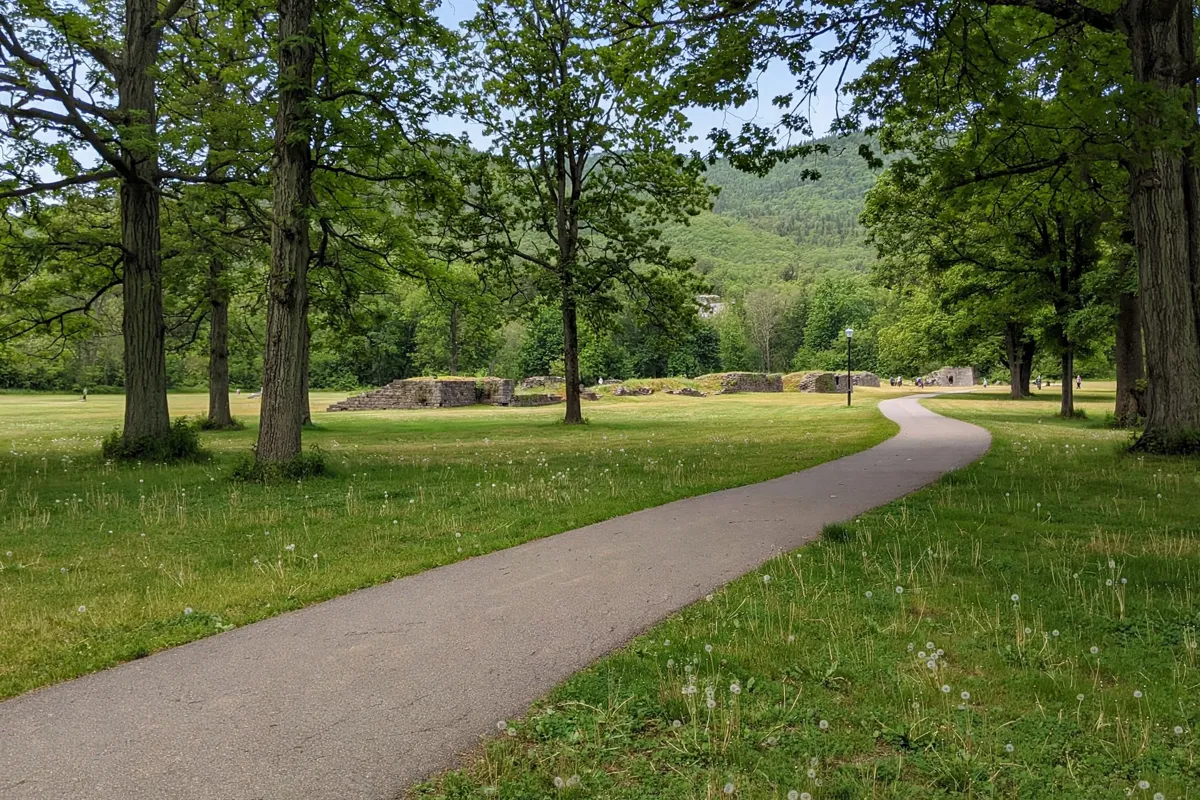
Fort George was an unfinished British fort, partially constructed in 1758–59. The park’s monuments include a statue of William Johnson and King Hendrick from 1903, a Mohawk Warrior statue given to the park in 1921, and a Saint Isaac Jogues statue dedicated in 1939.
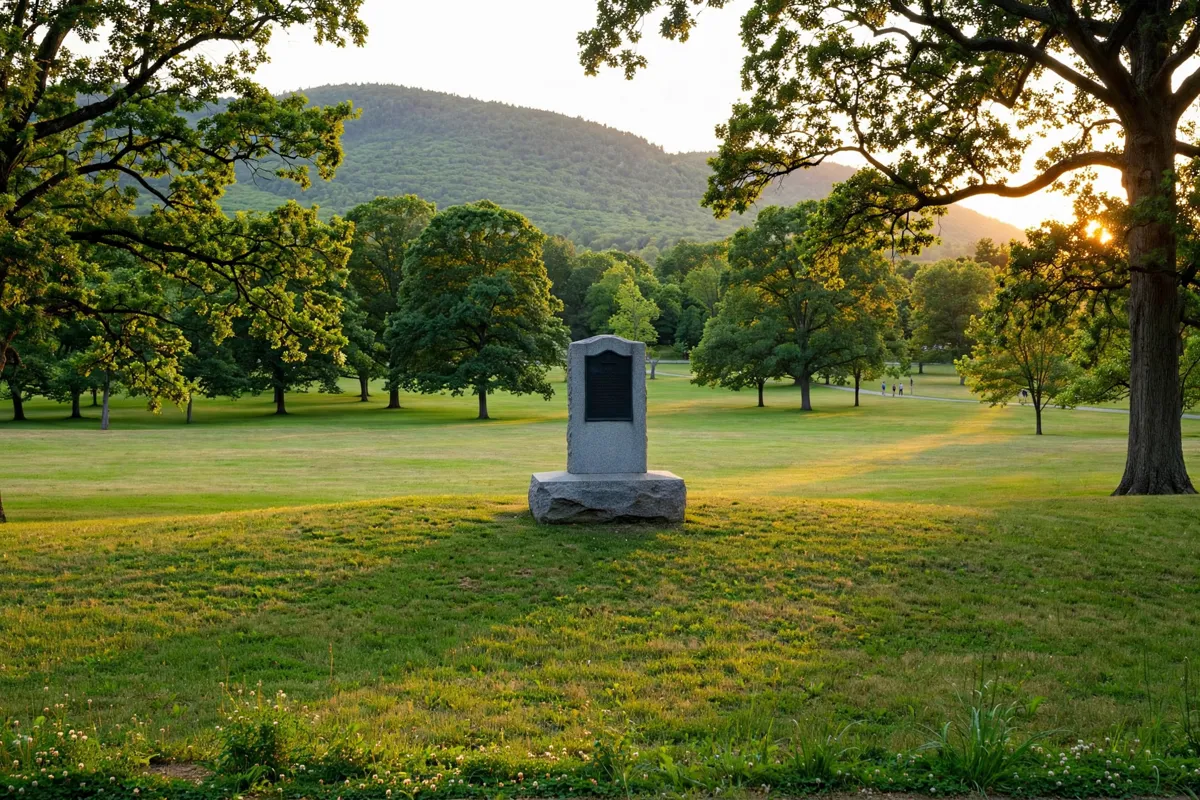
A memorial marks the burial site of four unknown colonial soldiers killed during the Battle of Lake George in 1755. They were reinterred there in 1935. For another nearby landmark connected with the area’s military history, read this guide to Fort William Henry.
What to Look For on a Walk
The park’s guide map labels a range of points of interest, so you can use it to pick out sites as you walk rather than treating the grounds as one single monument. Look for the Fort George ruins, the Battle of Lake George marker and statue, the Unknown Soldiers Monument, the Knox Trail Monument, and the Stockaded Fort Site.
Other map labels include the Mohawk Warrior and Saint Isaac Jogues statues, the Colonial Maritime Marker, Military Dock Marker and American Revolution Marker. The map also identifies the Fortified Camp/Smallpox Hospital Site, Limestone Quarry Site and Carleton’s Raid location.
The Alliance’s guide map and the New York State Department of Environmental Conservation’s self-guided tour identify points of interest, but do not give a recommended route length or walking time. The Alliance describes the monuments as dating from the early 1900s. Its Visitor Center is a museum with artifacts and exhibits.
Planning a Visit on Foot
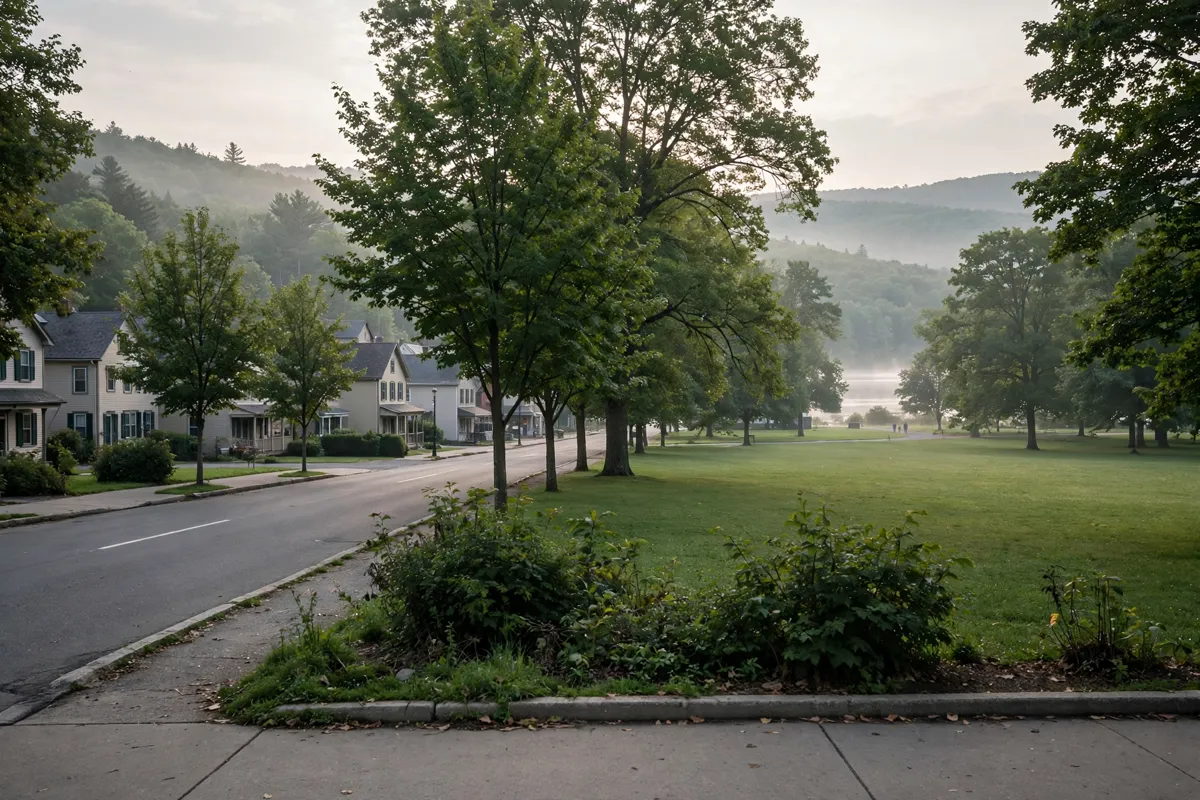
The park is about a ten-minute walk from Lake View Inn Lake George, so you can reach the grounds on foot. Once you arrive, use the park guide map or the self-guided tour to choose which labeled sites to visit; the sources do not prescribe a set walking circuit.
You can combine the park with Fort William Henry and the village for a day focused on local history and sights. The one-day Lake George itinerary brings together stops around the area.
Access and Visitor Center Information
The Visitor Center operates seasonally and by appointment during the off-season. Its schedule can vary, so check the official site before you go. The New York State Department of Environmental Conservation operates the park, while the Lake George Battlefield Park Alliance publishes the guide map and Visitor Center information.
FAQs
What historic sites are in Lake George Battlefield Park?
Among the labeled sites are the Fort George ruins, the Battle of Lake George marker and statue, the Unknown Soldiers Monument and the Fortified Camp/Smallpox Hospital Site.
What is the Unknown Soldiers Monument?
It memorializes four unknown colonial soldiers killed during the Battle of Lake George in 1755. They were reinterred at the site in 1935.
Does the park have a Visitor Center?
Yes. The Visitor Center is a museum with artifacts and exhibits, and it operates seasonally and by appointment during the off-season.